
![[HERO] The Bench is a Bank: Navigating the Commercial Courts as a Trustee](https://cdn.marblism.com/6AF8J8VKDG6.webp)
Rich Risings Royal Family! 👑
Welcome to the frequency of financial sovereignty and private education. Today, we are freestyling through the matrix of the commercial world to uncover the secrets of the “public” system that they don’t want you to see. If you’ve been following the journey of Don Kilam International, you know we don’t just look at the surface, we look at the ledger.
Everything in this reality belongs to the United States Corporation, but the question you have to ask yourself is: Who owns the debt? When you understand who holds the bag, you understand how to navigate the courtrooms, the banks, and the credit bureaus.
THE SOCIAL SECURITY TRUST FUND: WHO OWNS THE DEBT?
Most people are out here stressing about the national debt like it’s a burden on their backs. But here is the revelation: the Social Security Trust Fund (sometimes referred to in the private as the Cestui Que Vie Trust) is what actually owns the United States national debt.
Debt held by the public is over $22 trillion. They are always after the public because that is what is owed to the people. These corporations are technically set up to help the trustee or the beneficiary, which is you, but they have flipped the script. They set up private contracts so they can reap the benefits while you take the liability. They are accessing your credit through that Social Security number because they view you as a “debtor” rather than the “creditor” you were born to be.
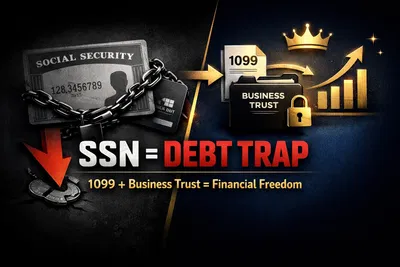
Everything is a tax issue. Everything is credits. When you understand that all debt is prepaid in this system, you stop running from the bill and start managing the UCC-1 filings and the credit building strategies that reclaim your status.
ETYMOLOGY REVEALED: THE BENCH IS A BANK
You walk into a courtroom and you see a judge sitting on a “Bench.” You think it’s just furniture. It’s not. In legal etymology, Bench means Banc. And Banc means Bank.
The “King’s Bench” is literally a place where money is kept and accounts are settled. When you are standing before a judge, you aren’t in a house of justice; you are in a financial institution. The judge is the banker, the clerk is the accountant, and the bail bondsmen are the brokers dealing with the “mines” (your mind and your energy).
A bond represents a promise by a borrower to pay a lender. When a bondsman accepts a bond, they are converting you into property. You become the surety for the debt. This isn’t about “guilt” or “innocence” in the way you were taught in school; this is pure commerce. The moment you understand that the court is a bank, you realize you have been playing a game without knowing the rules.
LAWFUL MONEY VS. FEDERAL RESERVE NOTES
People talk about “fiat money” like it’s the only thing that exists, but let’s look at what the United States Treasury actually says. According to the system, “Lawful Money” is any form of currency issued by the U.S. Treasury and the Federal Reserve System.
But here’s the kicker: Federal Reserve Notes (FRNs) are actually promissory notes. They are like stock certificates. If you have an FRN in your hand right now, the Federal Reserve owes you money. Treasury Notes and Treasury Bonds are also viewed as Lawful Money.
When you deal with the Social Security Trust Fund, you are essentially creating notes with the Treasury. This is why we focus on trust hacks and portfolio funding. You are the one creating the value; the banks are just the ones processing the paper.
THE SOLE PROPRIETORSHIP TRAP
Why does the system always want you to use your birth name? Because they are viewing you as a Sole Proprietorship.
In a sole proprietorship, there is no legal distinction between the owner and the business entity. This means you have unlimited liability. If the “business” (your name) messes up or owes a debt, they can go after your personal assets, your car, your home, your literal body.
Any time a judge asks, “Are you [Your Name]?” and you say “Yes,” you are stepping into the jurisdiction of a sole proprietor. You are admitting you are liable for that business entity. You haven’t distinguished that you are not the business. This is the ultimate “Name Game” that keeps people in a cycle of debt.
THE LLC NAME HACK: FLIPPING THE JURISDICTION
One of the most powerful moves you can make to protect yourself is to distinguish the name from the man. I started doing this in 2019. I took the all-caps name (the corporate strawman) and registered it as an LLC.
For example, if the name on the papers is JEFFREY MCBRIDE JR, I register JEFFREY MCBRIDE JR LLC.
Now, when they ask “Are you Jeffrey McBride Jr?” I answer as the Authorized Representative. I am not the business; I am the representative of the business. I have the Secretary of State’s stamp to prove it. This creates a barrier of limited liability.
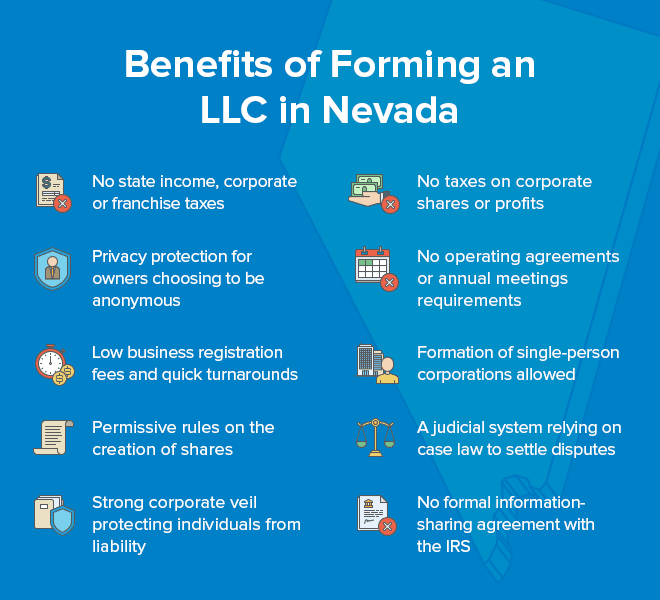
When you turn your name into an LLC or a Trust, you are moving from the public sector (where you have no rights) to the private sector. You are no longer a sole proprietor risking everything; you are a Trustee managing an estate.
SUI JURIS VS. PRO SE: WHY STATUS MATTERS
When you go into court, the first thing they try to do is label you as “Pro Se.”
Never file Pro Se.
In the legal world, “Pro Se” means you are representing yourself, but the court views this as being a “minor” or “incompetent.” It means you don’t know the rules of the bank (the court), so the judge has to appoint a “co-counsel” (a lawyer) to oversee you.
Instead, you operate Sui Juris.
Sui Juris means you are a person of your own right, not a minor under the control of another. In federal courts, utilizing the status of a “living man” or “Sui Juris” allows you to have the right to speak and to contract. You are the beneficiary, not the ward of the state. Understanding your status and standing is the difference between being a prisoner and being the one who writes the contract.
PRIVATE JURISDICTION IS REAL: THE AMISH AND JEWISH MODELS
If you think this is all “conspiracy,” just look at the Amish and Jewish communities. They have their own governments, their own IDs, and their own private education systems.
The Amish don’t accept Social Security, Medicare, or welfare. Because they don’t take the “public benefits,” they don’t fall under the “public jurisdiction.” They aren’t getting in trouble in these commercial courts because they operate in the private. They have their own government authority.
The system respects private jurisdiction when it is properly established. This is why you need to learn how to become a trustee. You have to stop begging for public benefits and start building your own private estate.
TAKE ACTION NOW
The courts are banks, and you are the one with the credit. Stop acting like a debtor and start acting like the Master of the Estate.
- Distinguish Your Name: Move away from the sole proprietorship trap. Register your name as a Trust or an LLC. Learn the name game secrets today.
- Correct Your Status: Stop appearing as “Pro Se.” Learn the language of the court so you can stand “Sui Juris.”
- Build Your Credit: Use your private structures to build business credit and access the funding that is rightfully yours.
- Learn the UCC: Master the rules of commerce to protect your assets from public seizure.
Text “TRUSTEE” to our office now to join the next class.
Contact us immediately to begin your private sector journey.
Welcome to the lifestyle of the sovereign.
Peace and Prosperity,
Don Kilam


Leave a Reply